Business finance guide
AI CFO: evidence and control
Evaluate AI finance tools by their data access, source evidence, approval controls, and limits on financial decisions.
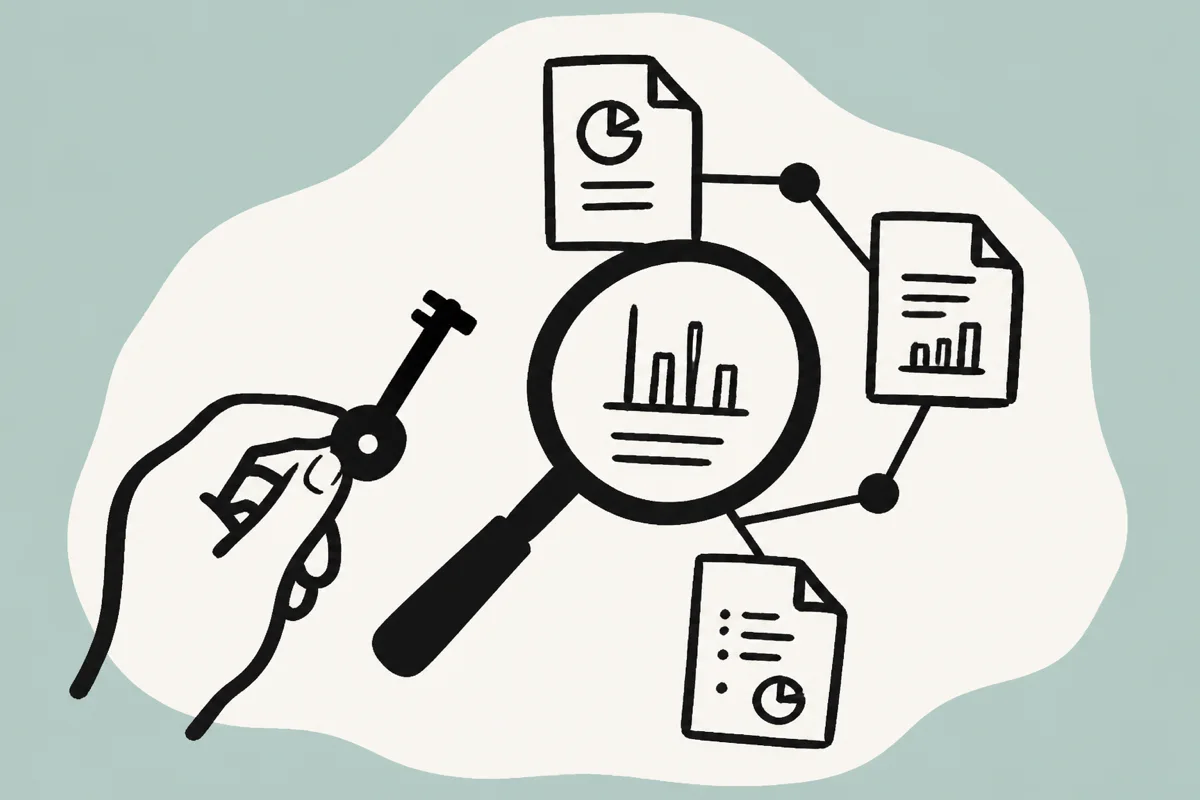
The practical definition
An AI finance assistant can organize records, calculate comparisons, and draft explanations. It is not a CFO: people approve access, accounting policy, external communication, and financial decisions.
What good finance answers
Before using an AI finance tool, ask:
- What decision is the analysis intended to support, and who remains accountable for that decision?
- Which systems, entities, periods, fields, and records can the tool access?
- Can a reviewer trace each material result to source data and reproduce the calculation?
- What happens when records are missing, unreconciled, inconsistent, or outside the tool’s permissions?
- Which tasks require a bookkeeper, controller, fractional CFO, tax professional, auditor, or other qualified person?
MosoFin lets authorized users query connected records in supported AI apps. Check the answer against source data before saving the review method as a skill.
Pressure points
The label can imply more authority than the tool has
“AI CFO” is a market label, not a licensed role or corporate appointment. Evaluate the exact tasks performed, the data used, the approval boundary, and the person responsible for the output.
Sensitive records may cross system boundaries
Before connecting financial data, document the provider, product plan, data path, retention, model-training terms, subprocessors, permissions, and deletion process. Review how Claude handles business financial data and MosoFin’s security model.
Confident language can hide weak evidence
An explanation can sound reasonable even when the books are incomplete or the metric is poorly defined. Require citations to records, show calculations, and state data coverage and limitations beside the answer.
Automation can blur preparation and approval
Reading records, preparing a reconciliation, and proposing an adjustment are different from posting an entry or moving money. Keep write actions in a separately authorized workflow with explicit human approval.
Operating rhythm
| Cadence | Review | Decision output |
|---|---|---|
| Before connection | Use case, permissions, provider terms, retention, risk owner | Approved scope, access level, and prohibited actions |
| Every run | Data coverage, reconciliations, source links, exceptions, reviewer | Accepted result, correction, escalation, or no-decision outcome |
| Quarterly | Access, saved skills, error patterns, provider changes, business impact | Renewed approval, tighter controls, retraining, or retirement |
Use the AI finance software evaluation workflow to compare a product’s real controls and evidence model rather than relying on the category label.
AI with controls
A controlled AI finance workflow should:
- Default to read-only, least-privilege access and record who authorized the connection.
- State entity, period, accounting basis, source coverage, and metric definitions in every material output.
- Link findings to the reports, accounts, transactions, customers, vendors, and assumptions used.
- Detect missing records, unreconciled accounts, classification inconsistencies, and unsupported assumptions.
- Preserve a review trail that shows the question, method, evidence, output, reviewer, and disposition.
- Require people to approve journal entries, payments, forecasts, policy choices, financing, tax positions, and external reporting.
Key takeaways
Start with the decision, not the model
Define the finance question, records, period, acceptable evidence, and accountable reviewer before choosing an AI workflow.
Use connected data with least privilege
Prefer read-only access, scoped permissions, documented retention, and a clear path for revocation and audit.
Require source-linked answers
Material findings should point to reports, accounts, transactions, customers, vendors, or assumptions that a person can inspect.
Separate analysis from authority
An AI assistant can prepare options and checks. People approve entries, payments, policies, forecasts, and external representations.
Compare AI and human support by task
Use AI for repeatable analysis and monitoring, and human finance leadership for judgment, negotiation, accountability, and context.
Explore ai cfo workflows
Open the focused review that matches the decision in front of you.
Evaluate AI finance software for connected business data
How can I evaluate AI finance software for connected business data using our actual records?
Open workflow → ComparisonCompare a finance agent with a fractional CFO
How can I compare a finance agent with a fractional CFO using our actual records?
Open workflow → SkillReview AI-assisted bookkeeping
How can I review AI-assisted bookkeeping using our actual records?
Open workflow → SkillUse AI to assist financial modeling
How can I use AI to assist financial modeling using our actual records?
Open workflow → GuideUse generative AI for financial analysis
What should I know about generative AI for financial analysis when reviewing our actual records?
Open workflow → TermWhat is a fractional CFO?
What is a fractional CFO, and how does it apply to our business?
Open workflow →What people are asking
Community posts describe practical concerns. They are not accounting authority.
- What are fractional CFOs actually using AI for?
A discussion based on interviews with finance leaders separates practical automation from broad AI claims.
- Are agentic AI tools improving finance-team work?
CFO practitioners discuss useful workflows, skepticism, controls, and the work that still requires professional judgment.
- Can ChatGPT act like a CFO for a small contractor?
Business owners show interest in plain-language financial analysis while raising questions about scope and reliability.
Further reading
Last reviewed August 14, 2026
Educational information only. Review source records and apply your organization's accounting policies and professional judgment before acting.