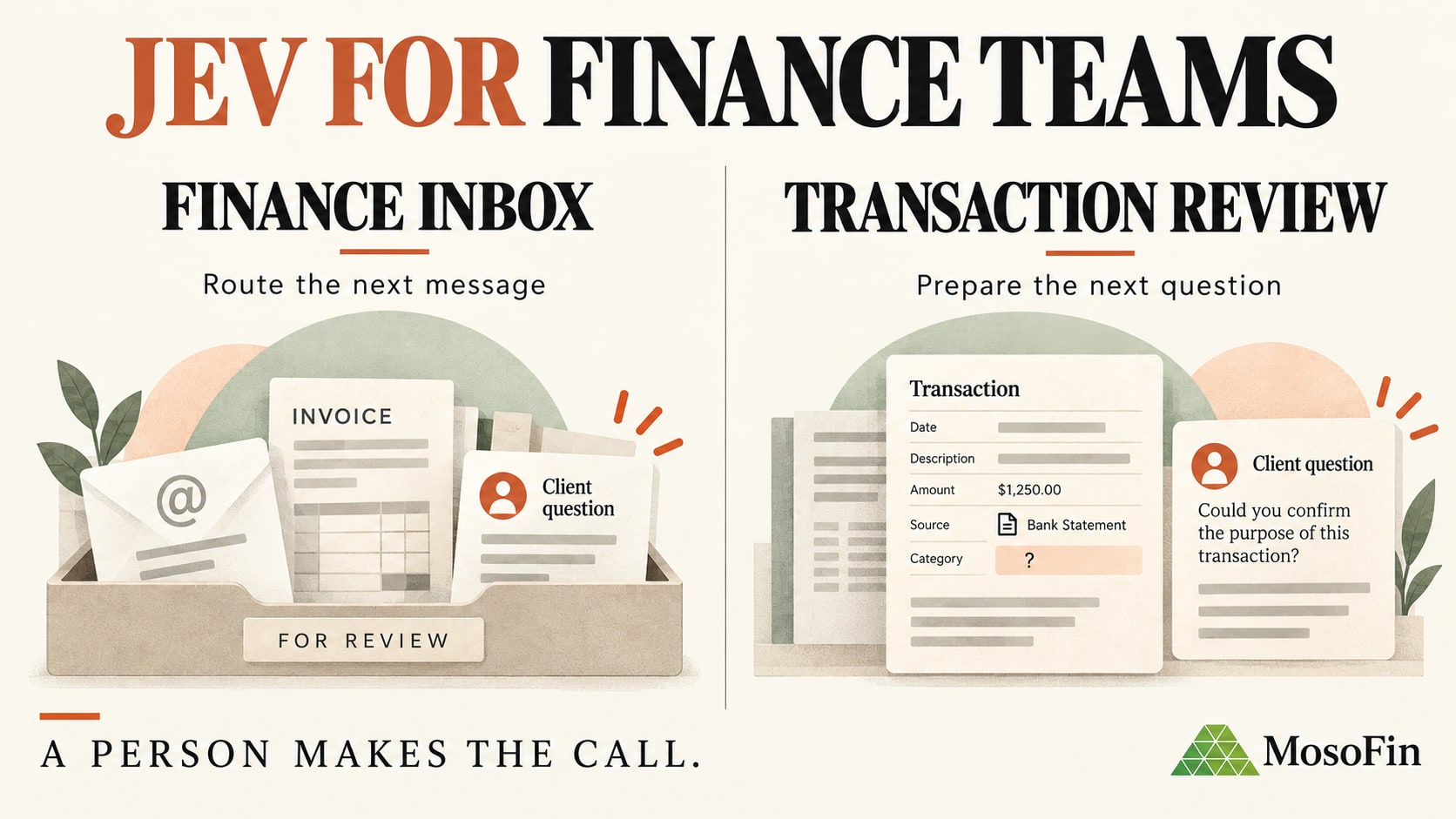
Jev returns structured decisions that an application can use to route work. For finance teams, that could mean sorting a shared inbox or flagging transactions that need a client question. TypeSafe’s use-case guide describes classification and routing patterns.
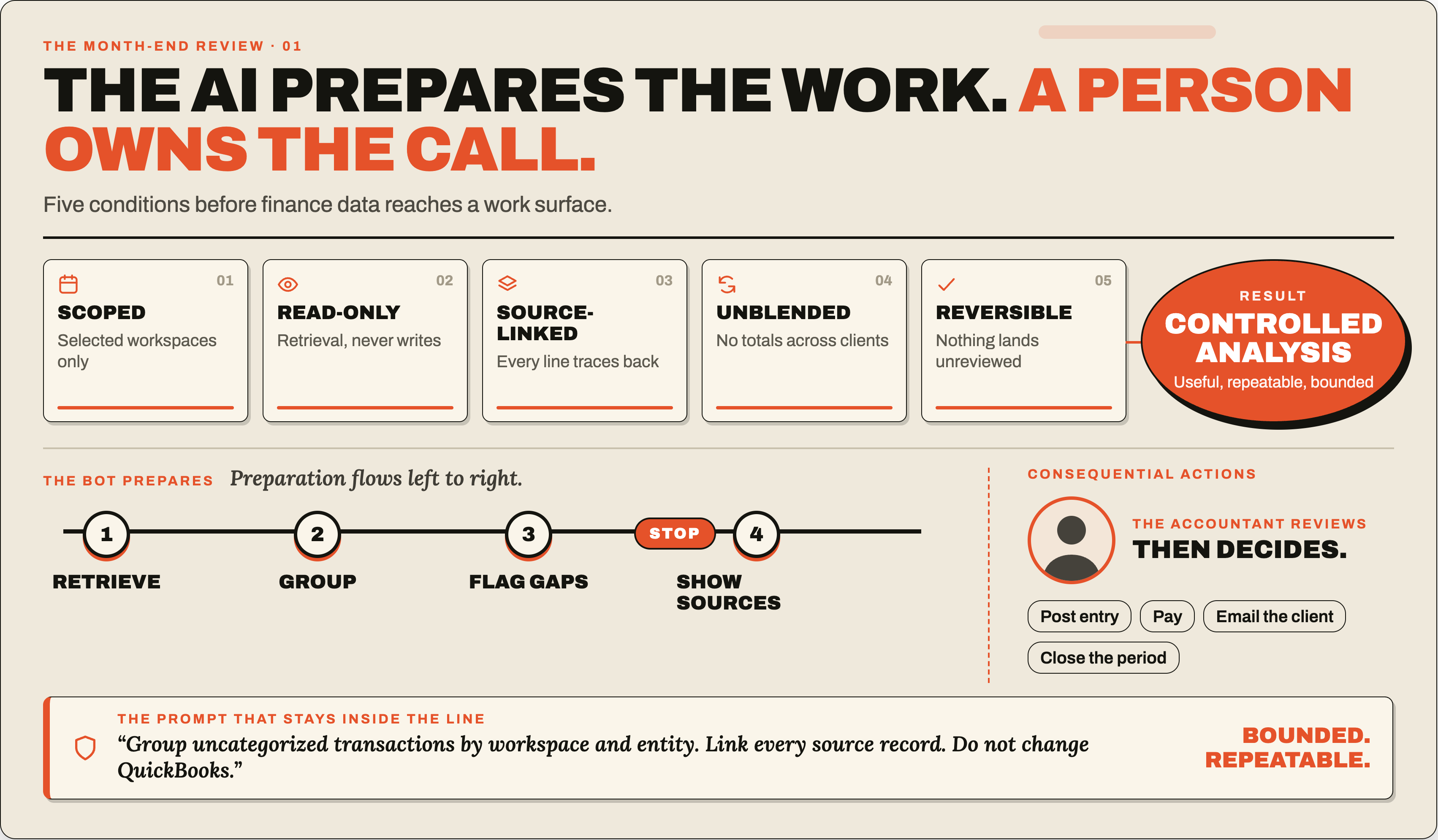
These are proposed designs, not released MosoFin–Jev integrations. A person still reviews any client communication or accounting change.
The simplest use case: classify a shared finance inbox
Start outside the accounting system. A shared address such as billing@, ap@, or accounting@ receives a steady mix of payment confirmations, receipt attachments, client questions, vendor requests, and messages that belong somewhere else.
Set up one route with five fixed destinations:
| Email type | Route | Who handles it |
|---|---|---|
| Payment confirmation | Payments review | Accounts receivable or accounts payable reviewer |
| Receipt or invoice attachment | Document intake | Bookkeeper or document process |
| Client question | Client-response queue | Client manager or bookkeeper |
| Urgent issue | Human review | Designated finance owner |
| Other or uncertain | General review | Person decides the destination |
The application sends Jev the email details needed to classify it, checks that the returned route is one of the five allowed options, and logs the decision. Uncertain messages—and anything suggesting fraud or payment risk—go to a person promptly.
The first version should only apply a queue label or create a task. It should not reply, rename files, create bills, or change the ledger. Measure routing errors before adding consequential actions.
A MosoFin-shaped use case: prepare the client-question queue
An accountant selects an authorized MosoFin workspace and reviews uncategorized transactions. MosoFin retrieves source records and relevant history through read-only QuickBooks access. A proposed Jev workflow could route each item as:
| Decision | Result | What the accountant receives |
|---|---|---|
| The history is enough to review | Ready for accountant | Transaction, prior coding pattern, and source record |
| The business purpose is unclear | Ask client | Transaction details and a concise question draft |
| The record is incomplete or conflicting | Needs more evidence | The missing detail and linked source record |
The result is a client-question list grouped by workspace and entity. The accountant checks each suggestion against its source record, removes weak questions, and decides what to send. Keep client totals separate.
Jev only proposes a route. The application enforces workspace scope and read-only retrieval; an authorized accountant decides whether to contact a client or change a record.
A brief setup plan
Start with the inbox classifier; it does not touch the books.
- Choose one shared mailbox and five route labels.
- Collect a small, reviewed set of historical emails with the route the team actually chose.
- Send the email state to Jev and record the proposed route and eventual human outcome.
- Run it in shadow mode for a week: Jev recommends a route, but a person places the email.
- Review the errors. Refine the route definitions and fallback rules before automatically applying a label.
Use the same approach for the transaction-review queue. Start with a completed month, compare the suggested client questions with the questions an accountant actually sent, and keep the workflow read-only while the team evaluates it.
Sources
- TypeSafe AI, Example use cases
- MosoFin, Security
- MosoFin, How MosoFin works